
The Science of Reading and Classical Education: Why They Were Made for Each Other

Classical education has always known something that modern schooling is only now rediscovering: language is the foundation of everything. Before a student can engage with great ideas, reason through an argument, or appreciate a beautiful poem, they must first be able to read. Classical educators have insisted on this for centuries — teaching language systematically, grounding students in memory and recitation, and surrounding them with literature worth reading from the very beginning.
Modern reading science has arrived at exactly the same place. After decades of conflicting approaches in mainstream education, the research consensus is clear: systematic phonics, explicit instruction, and rich literary exposure are not optional enrichments. They are non-negotiable foundations. For classical educators, this is not a revolution. It is a confirmation.
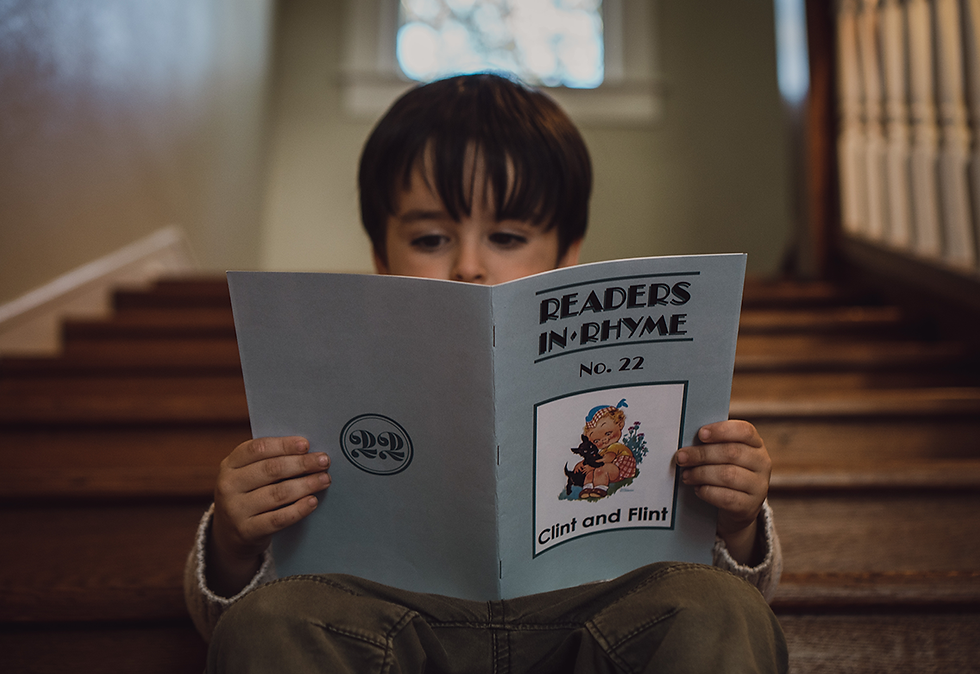
The science of reading and classical education: what the research says
The science of reading is not a program you can purchase or a method with a trademark. It is a body of converging research — from cognitive psychology, linguistics, and neuroscience — that describes how the human brain learns to decode and comprehend written language. The National Reading Panel, decades of studies on structured literacy, and ongoing work in cognitive science all point toward the same five foundational pillars:
Phonemic
awareness — the ability to hear, identify, and manipulate the individual sounds (phonemes) in spoken words
Phonics — the systematic understanding of how letters and letter combinations map to sounds, enabling a reader to decode unfamiliar words
Fluency — the ability to read accurately, at a reasonable pace, and with appropriate expression
Vocabulary — knowledge of word meanings, both spoken and written, that allows a reader to understand what they decode
Comprehension — the ability to construct meaning from text, drawing on everything a reader knows about language and the world
These five pillars are not a checklist to rush through. They are interdependent skills that develop together over years of careful, cumulative instruction. And every one of them has been central to classical education long before modern research gave them names.
What classical education already knew
The classical trivium begins with the Grammar stage — not grammar in the narrow sense of parts of speech, but grammar in its original meaning: the systematic study of language itself. In the Grammar stage, children are understood to be in a natural window for absorbing the rules, patterns, and forms of their language. Classical educators have always responded to this window with explicit, structured instruction.
Classical phonics instruction is not a recent innovation. The tradition of teaching letter-sound correspondences, drilling phonograms through repetition, and building vocabulary through exposure to rich literary language predates the reading wars by centuries. Classical educators have long understood that a child cannot encounter the great books without first being taught, explicitly and carefully, how to read.
The classical tradition has also always valued memory and oral language as preparation for literacy. Nursery rhymes, poetry, and oral recitation are not decorative additions to a classical curriculum — they are the phonological foundation on which reading is built. When a child memorizes a poem, they are practicing phonemic awareness, absorbing vocabulary, and developing the ear for language that fluent reading requires. Classical educators knew this intuitively. Reading science has now explained why.
Perhaps most significantly, the classical tradition has always insisted that the content of what children read matters. Exposing young students to beautiful, morally serious literature is not sentimentalism — it is the most effective possible vocabulary and comprehension instruction. A child who reads Aesop and Plutarch alongside their phonics lessons is not just learning to decode. They are building the deep background knowledge and rich vocabulary that comprehension depends on.

Where the science of reading and classical education converge
The alignment between structured literacy and classical education is not superficial. It runs through every pillar of the research:
Explicit phonics instruction. The science of reading is unambiguous: phonics must be taught systematically and explicitly, in a deliberate sequence, with nothing left to discovery or inference. Classical educators have always taught this way. Classical phonics instruction has never relied on whole-language guessing or the hope that children will absorb letter-sound patterns through exposure alone.
Phonemic awareness through oral tradition. Research identifies phonemic awareness — the ability to hear and manipulate sounds in spoken words — as the strongest early predictor of reading success. The classical tradition builds this through nursery rhymes, poetry, choral recitation, and oral language play, long before a child sees a letter. The classical habit of reading aloud to children from infancy is phonemic awareness instruction, whether or not it has ever been labeled as such.
Vocabulary through literary exposure. The science of reading establishes that vocabulary is not efficiently taught through vocabulary lists — it is built through wide reading and deep engagement with rich language. The classical curriculum's insistence on beautiful, literary content from the earliest years is the most research-aligned vocabulary instruction possible.
Fluency through narration and oral reading. Classical educators have always used narration — asking a student to retell, in their own words, what they have read or heard — as a core pedagogical tool. This practice builds reading fluency, comprehension monitoring, and vocabulary simultaneously. Research has confirmed all three benefits.
Comprehension through great books. Comprehension is not a skill that can be practiced in isolation. It depends on background knowledge, vocabulary, and the ability to follow complex ideas across a sustained text. The classical curriculum builds all three, deliberately and progressively, through engagement with the Western tradition's greatest works.
Why this matters when choosing a classical school reading curriculum
For administrators and parents choosing a reading curriculum for a classical school, the science of reading provides a clear standard: look for a program that teaches phonics systematically, uses decodable practice texts that match the phonics sequence being taught, and surrounds children with content worthy of a classical education.
This is a short list, but it rules out most commercially available reading programs. Programs built on sight-word memorization, leveled readers, or incidental phonics fail the first criterion. Programs with controlled vocabulary but dull, utilitarian content fail the third. A truly classical school reading curriculum demands both rigorous phonics instruction and stories worth reading — stories with beautiful language, genuine characters, and themes that connect to the tradition the school is building in its students.
This is a high standard. It is also an achievable one.
How Readers in Rhyme embodies both traditions
Readers in Rhyme is a K–3 classical phonics curriculum designed from the beginning to meet both standards. The program's structure reflects the science of reading: five levels of scripted, sequential lessons covering all 74 phonograms, with 80 decodable readers that match the phonics sequence exactly, multisensory activities at every level, and a systematic scope and sequence that builds cumulatively from CVC words through complex phonograms.
Its sensibility is classically formed. Every reader features beautifully restored vintage illustrations. Stories are written in rhyme — building phonological awareness through the same oral tradition classical education has always prized. Each level includes poetry, nursery rhymes, and picture study. The virtue themes woven through every story reflect the conviction, shared by every classical educator, that what children read shapes who they become.
Readers in Rhyme is used in classical schools, Catholic academies, and classical homeschool programs across the country, including Great Hearts Academies and Ascent Classical Academy. For schools already committed to classical education, it provides the structured literacy foundation that the science of reading requires — in a form that a classical school can be proud to put in its students' hands.

Is classical education aligned with the science of reading?
Yes — more closely than almost any other educational tradition. Classical education's emphasis on explicit phonics instruction, oral language, rich literature, and cumulative skill-building aligns with every pillar of the research consensus on how children learn to read. In many respects, classical education anticipated the science of reading by centuries.
The science of reading confirms what classical educators have always believed
The research is not asking classical educators to change their approach. It is explaining why that approach works. Systematic phonics, beautiful literature, oral tradition, and cumulative instruction are not relics of an older pedagogy — they are exactly what the science of reading prescribes. Classical education and structured literacy are not in tension. They are, in the end, the same tradition, seen from two different directions.
If you are looking for a reading curriculum that honors both, Readers in Rhyme was built for your school.


Comments